Luggage drop test guide: Questions buyers should ask their factory
For those who buy suitcases, a good-looking suitcase is not enough. The real question is: can it survive shipping, airport handling, retail display and use for daily travel?
That is why the luggage drop test is important.
A drop test helps buyers see how a suitcase behaves when dropped, bumped or handled roughly. This is especially true for hardside luggage, because in actual travel the shell, wheels, corners, area around the handle, area around the lock and the zipper structure can all be impacted.
When you source hardside luggage for wholesale, e-commerce, private label, retail or gift channels, then you should ask your factory clear questions about drop testing before confirming bulk production.
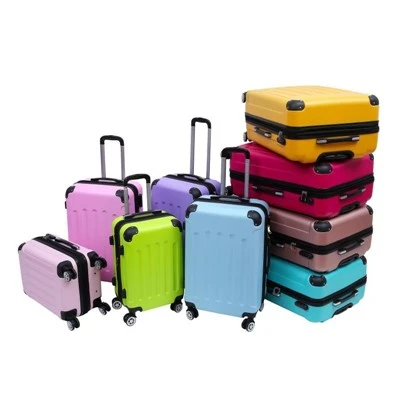
Our hardside luggage can be made in ABS, ABS+PC or PP material, common sizes are 20 inch, 24 inch and 28 inch. Quality control can include: inspection on the way out, drop testing, wheel testing and trolley handle testing. For buyers, these checks lessen the risk of after-sales problems and increase the long-term reliability of the product.
What is a Luggage Drop Test Simulating?
A luggage drop test was developed to reproduce impact conditions that might be encountered during transport and travel.
In use the luggage can be:
Lost in airport baggage handling
Loading and unloading knocked in
Pulled over curbs, steps or rough ground
More or less crammed into cars, buses or storerooms
Dropped in warehouse handling
Damaged during international transit
For hardside luggage, these impacts may not always immediately break the entire suitcase. Sometimes the first visible problem is in small but important parts: a cracked corner, a loose wheel base, a broken handle, a deformed zipper area or a damaged lock position.
That's why buyers should not simply ask if the factory "does drop testing." They should ask about the test procedure, what parts are checked after the test and how the test result is recorded.
What Buyers Need To Verify Before Testing
A drop test is useful only when testing conditions are clear. If a factory simply states that "we have drop test," buyers need to ask for specifics.
Here are the takeaways to check.
1. Load test
The suitcase needs to be tested under realistic loading conditions.
Questions buyers should ask:
Is the suitcase tested empty or loaded?
What is the weight added in the test?
Is the load different with the 20 inch, 24 inch and 28 inch sizes?
Does the weight inside spread out evenly?
Is the luggage tested with normal packing simulation?
This is important because a loaded suitcase increases the pressure on its shell, wheels, handle, corners and the zipper structure.
Our standard hardside luggage sizes are 20 inch, 24 inch and 28 inch with approximate net weights of 2.8 kg, 3.5 kg and 4.5 kg respectively depending on size and configuration. One test condition for all sizes should not be applied until confirmation is obtained, as larger luggage is generally used for heavier packing.
2. Droprate
The higher the drop, the more severe the test.
Buyers should inquire:
What is the height of the fall?
Is the height of all sizes of luggage the same?
Drop height: Is it according to buyer requirements or factory standards?
Can factory adjust test height for different market requirements?
Do not assume all factories use the same drop height. If your sales channel needs a higher drop height, it must be confirmed before the sample can be approved.
3. Angle of Drop
Sometimes a suitcase won't lie flat. In real travel it hits the ground at different angles.
Buyers should inquire if the test includes impact on:
Wheels Corners
Side panels
Panel frontal
Rear panel
Handle area.
Bottom surface
Zipper and lock area
Corner impact and wheel-side impact are especially important for hardside luggage as these areas often experience strong stress when travelling.
4. Drops Count
One drop may not be enough to show how durable the product is.
Buyers should be asking:
How many times is the bag dropped?
Are separate sides tested?
Is the same sample tested again?
Are results verified after each drop or only after the complete test?
Repeated impact can reveal problems that do not show up after the first drop. This is helpful for buyers who sell through e-commerce, retail or distributor channels where negative reviews and returns can quickly impact sales.
5. Inspection after test
The dropping process is not the most important part of a drop test. It is also the post test inspection.
After testing, the factory should check if there are:
Shell cracks
Damage to the corner
Loose wheels
Cracks in the wheel-base
Broken Handle Parts for Trolley
Zipper field deformed
Damage with locks
Open seams
Damage to inner lining (
Operational issues during opening and closing
And a suitcase may still look okay at a distance, but small functional problems can turn into customer complaints later.
Which Luggage Components Are Most Prone to Breaking?
All parts of a suitcase are subject to different kinds of stress. There are certain areas that buyers need to pay attention to when drop testing.
1. Corners
When the luggage is dropped or knocked, the corners usually take the impact. Hardside luggage with cracked corners can immediately undermine customer confidence in the product.
Buyers need to check if the corner area reflects:
Stress Marks in White
Cracks
Deformity
Split edges of the shell
Loose structure round the wheel base
2. Wheelbase
The wheel base is one of the most important parts to look at when it comes to drop testing.
Many problems with luggage wheels are not caused by the wheels themselves. They begin at the wheel housing or at the connection point between the wheel and the shell.
Check: Buyers are advised to
Is the wheel tight?
Does the wheel spin freely after the impact?
Any cracks around the wheel base?
Screws lose?
Is the suitcase still balanced evenly?
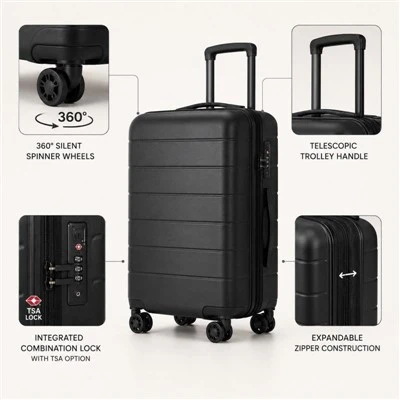
Our hardside luggage features 360° spinner wheels and silent wheels design. For buyers, the wheel should be considered along with the wheel base, not separately.
3. Trolley Handle Zone
The trolley handle is another high-risk part, especially when the suitcase is dropped on the back or the top side.
Buyers should be aware:
Will the pull up and push down on the trolley handle still work?
Is the handle tube bent or loose?
Are the handle fixing points broken?
Is the handle more wobbly than before?
OUR LUGGAGE CAN BE CONSTRUCTED WITH IRON OR ALUMINIUM TROLLEY HANDLES. A three-section trolley handle can be made for 20-inch luggage, and a two-section trolley handle can be made for 24-inch and 28-inch luggage. The buyers should check the structure of the handle as per the target product level and market positioning.
4. Expansion Area and Zipper
If the suitcase has an expandable zipper then the zipper area should be checked post impact as well.
Buyers should verify:
Does the zipper still work smoothly and open and close?
Is the expansion layer distorted?
Any gaps after closing do you get?
Zipper pull stay?
We have a hardside luggage with expandable zipper. Buyers should test the expandable structure carefully as it affects the capacity and durability.
5. Lock zone
Check the lock area after impact – particularly for products sold to the U.S. and European markets where buyers may ask for TSA lock options.
Buyers should inquire:
Is the lock still functional after the drop test?
Deformed lock position?
Does the lock hold firm?
Does the zipper line up with the lock?
Our standard configuration can use regular lock, and special requirements can be made for TSA lock. Buyers must check the lock type before accepting sample.
How to Document Drop Test Results in Purchase Standards
The drop test should not be a promise in words. Buyers should include the testing requirement in the purchase standard, sample approval document, or quality control checklist.
Here's a practical structure buyers can use
1. Definition of the Test Object
Specify the size and structure of the baggage to be tested.
For example:
20 inch carry on luggage
24 inch check suitcase
28-inch suitcase Checked
Luggage set (3 pieces)
Non-expandable or expandable version
Shell Material: ABS, ABS+PC, PP
This avoids confusion with different models.
2. Establish Test Conditions
The buyer must write clearly:
Test load
Drop height
Angle of drop
Drops count
Surface test,
Amount of sample
Inspection method
If your factory has their own internal method, ask them for the details before production.
3. Establish Pass/Fail Criteria
The standard for purchase should be clear about what is acceptable and what is not.
Potential points of failure are:
Shell breaking
Cracks in wheelbase
Wheel off
Trolley handle broke down
Lock failure
Zipper broken
Strong deformation
Product does not stay together
Product can not be opened or closed properly
This helps to prevent disputes after inspection.
4. Note down the Result
Request the factory for clear test records.
Here's what could be in a good drop test report:
Model
Substance
Size
Date of Test
Test load
Height measurement
Drop angle
Number of decreases
Before and after testing photos
Summary of results
Inspector's notes
If possible, buyers may also request a short test video. this is useful not only for quality control but also for communication in B2B sales.
How Drop Test Videos Can Aid B2B Sales
Drop test videos are not just internal quality control materials for B2B luggage suppliers. And they can be strong sales assets as well.
A clear drop test video will help the buyers understand:
How does the factory test product durability?
the test is run on actual luggage samples
What parts are checked after impact
How the product behaves under stress
If the supplier has a quality control process
This kind of content is helpful for importers and distributors in communicating with:
Retail buyers
E-commerce merchants
Private label brands:
Corporate gifts buyers
Local dealers
Instead of saying "our luggage is durable," a factory can show how the suitcase is tested. This builds trust and supports Google EEAT, as the content shows real experience, product knowledge and transparent quality control.
B2B Buyer Checklist: What to Ask Your Factory
Those questions are asked by buyers before they place a bulk order:
Do you do drop testing prior to shipping?
What sizes of luggage are tested?
Is the tested suitcase loaded or empty?
What is your drop height?
Which sides or angles are being measured?
How frequently does each sample come out?
Do you check the wheels, corners, handle, zipper and lock after testing?
Can you send me a few test pictures or videos?
Can the drop test requirement be added to the purchase order?
Can you give me a sample drop test report for the buyer to review?
Do you do wheel testing and trolley handle testing?
Do you provide support for replacement parts and after-sales service?
These questions prevent buyers from receiving vague responses and make the sourcing process more transparent.
What other things should buyers look for besides drop testing
Drop testing is important but it has to be part of an overall quality control process.
Buyers should also check prior to bulk ordering:
Shell Material: ABS, ABS+PC or PP
Size: 20 inch, 24 inch, 28 inch or three-piece set
Net weight per size
Whether expandable zipper included
If you are looking for luggage with 360° spinner wheels
If the wheels are silent wheels,
Trolley handle material and height parts
Type of lock: regular one or TSA lock if you need
Interior construction: X strap, zipper divider, mesh pocket, wet/dry section
Packaging style
MOQ
Time for sample
Lead time for mass production
After-sales support and spare parts
Our luggage can support OEM/ODM customization such as logo, color, size, packaging. Existing molds can have 200 sets MOQ for per style. The sample time is within 10 days and mass production time is around 40 days after details confirmed.
FAQ Luggage Drop Test Q:
What is a baggage drop test?
Luggage drop test assesses the performance of a suitcase when dropped/impacted. This enables buyers to test the strength of the shell, corners, wheels, handle, lock, zipper and overall structure.
What is the importance of drop testing for hardside luggage?
The hard impact can crack, warp or cause stress marks in hardside luggage. Drop testing lets buyers spot weaknesses before mass production.
Is it necessary to drop-test the luggage with weight inside?
Buyers are to check with the factory. Real travel usage is more like a loaded suitcase, especially for 24 inch and 28 inch checked luggage.
What parts to look for in a drop test?
Buyers should check the corners, wheel base, spinner wheels, trolley handle, zipper, lock, shell surface and interior structure.
Can Drop Test Videos Help With B2B Sales?
Yes. A drop test video shows buyers that the factory has a real quality control process. It can also support product pages, sales presentations, distributor communications and private-label buyer discussions.
Can buyers ask for drop test report?
Yes. Buyers can ask factory for a drop test report sample or testing record, including product model, size, material, test conditions, photos, videos and result summary.
Closing thoughts
The luggage drop test isn't just a simple factory procedure. It is a practical tool to reduce after-sale risk, increase buyer confidence, and establish a stronger product standard.
For importers, the most important thing isn't just asking, "Do you have drop testing?"
Better questions are:
What is it exactly that you test?
What conditions do you test under?
"After testing, what parts do you check?
How do you write down the result?
Can the requirement be added to the purchasing standard?
A good factory should be able to explain clearly its quality control process and give buyers practical testing information.
Click To Act
Would you like to see a sample drop test report before you buy your luggage?
Please contact us if you would like a sample drop test report or wheel testing details or trolley handle testing information or OEM/ODM luggage solutions for your target market.