Hardside Luggage Zipper Quality: YKK, Anti-burst and Expandable Risk
For importers of hardside luggage, zipper quality is not a minor detail. It's part of the suitcase structure.
A hardside suitcase might have a strong shell, smooth spinner wheels and a stable trolley handle, but if the zipper bursts, jams, separates or loses stitching tension the entire product can quickly become a customer complaint. This is particularly true for e-commerce sellers, distributors, gift channels and private-label luggage brands where product reviews and after-sales costs directly impact repeat orders.
Buyers typically begin by looking at shell material, size, color, wheels and lock options. These are important, but the quality of the zipper should also be checked before ordering in bulk, especially when the luggage has an expandable zipper design.
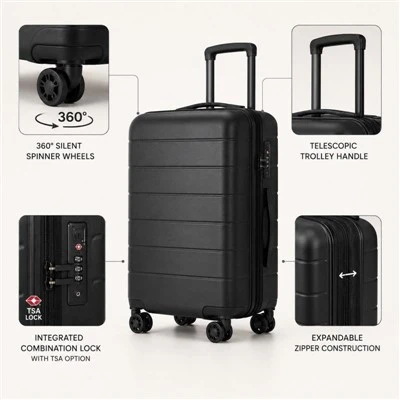
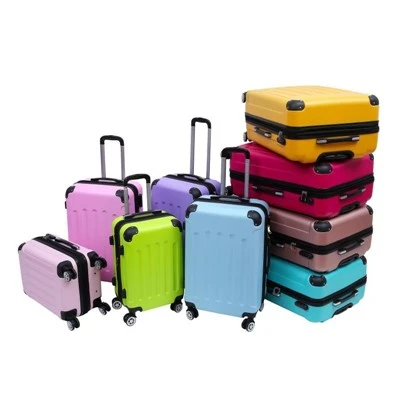
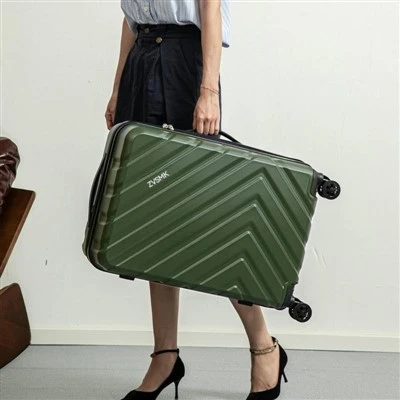
Our luggage with hardside shell in ABS, ABS+PC or PP. Sizes: 20 inch, 24 inch, 28 inch in regular sizes. All styles can be made with expandable zipper design. This means zipper structure, sewing quality, smoothness and durability should be checked carefully during sample approval by B2B buyers.
Zippers as part of structural safety
A luggage zipper holds together two shell sections, providing pressure on the packed items in the suitcase. Overpacking, lifting, impact, dragging and compression while traveling all put constant stress on the zipper area.
If the zipper is weak, a number of problems may arise:
The zipper teeth separate when you press on them
The slider gets stuck or is hard to pull
The zipper tape separates from the shell
Zipper line unzips, stitches ravel
The expandable section is uneven or distorted
The suitcase cannot be zipped fully when packed
For hardside luggage, zipper quality is closely related to the overall product structure. A bad zipper makes a good shell look cheap. But a good zipper system will boost customer confidence and reduce the after-sales risk.
For importers, zipper inspection should not only focus on whether the zipper opens and closes. It should also evaluate the zipper performance when the suitcase is loaded, expanded and repeatedly handled.
What is the Difference Between Regular Zipper, Anti-Burst Zipper and Reverse Coil Zipper?
Suppliers might use different zipper terms for buyers looking for hardside luggage. The most common types are normal zippers, anti-burst zippers and reverse coil zippers.
Zipper Regular
Most standard luggage styles have a regular zipper. Suitable for cost sensitive products, basic retail channels and general travel luggage.
But for importers, zipper smoothness, stitching quality and strength under pressure are other things to look at. If the product is for e-commerce or will travel frequently, the zipper should be checked very carefully during the sample testing.
Anti-Burst Zipper
An anti-burst zipper is designed to minimize the likelihood of zipper separation under pressure on the suitcase. You typically see this type of zipper on better quality luggage or on products made for users who might pack heavily.
The key point for B2B buyers is the name "anti-burst" is not only the name. Buyers should ask the supplier to explain the zipper structure and give a comparison of regular zipper and anti-burst zipper options.
Zipper with Reverse Coil
A reverse coil zipper, sometimes called a reversed zipper by some suppliers, has the coil facing inward or less exposed. This can give a more clean appearance and may also help to protect the zipper teeth from direct friction from outside.
When the luggage importers choose the reverse coil zipper, the product design, cost level and the target market positioning should be considered.
Importer's Tip
Never approve a zipper option by name only. Get physical samples, feel the smoothness, look at the stitch work and test the suitcase when it's loaded up.
Do You Always Need YKK for Hardside Luggage?
YKK is a well-known brand of zippers and many buyers associate it with stable quality. YKK could help improve buyer confidence and product positioning for premium luggage, gift channels or business travel products.
But YKK is not always required for every order.
For importers the choice is made on:
Suggested retail price
Positioning on the market
Customer needs
Budget order
Channel of Distribution
Warranty strategy
Brand history
Quality level required
If the luggage is positioned as a high-end business or premium travel product, YKK can be an option. A good-quality non-YKK zipper can be acceptable if the product is intended for cost-effective wholesale or promotional channels, as long as it passes inspection and runs smoothly.
The best thing is to compare zipper options before production.
Importers may request:
Standard Zipper Option
Anti-burst zipper selection
YKK zipper choice
Option for reverse coil zipper
Expandable zipper design
Color matching zipper
Zipper-puller design
Difference in price between the options
This allows buyers to make a clear decision based on market positioning rather than just on name.
Expandable zipper risk More room, more stress
Expandable zipper is another popular feature as it allows travelers to gain additional packing space. This is also a good selling point for product pages, as buyers often search for expandable hard side luggage.
Our hardside luggage styles can be made with expandable zippers. This feature is helpful for travelers who need extra capacity, particularly for return journeys, business samples, shopping or family trips.
However, the expandable zipper also brings structural risk if the design is not well controlled.
The stress level in the zipper area is higher when the suitcase is expanded. If the customer over packs the suitcase, more stress can be put on the zipper, stitching and side structure.
Expandable zipper hazards can include:
Zipper separation at pressure
Irregular form of spread out
Expandable layer seam tension
Lower stability of shell in fully expanded state
More pressure on the zipper teeth slider
Higher after sales risk if customers over-pack
To importers, the point is to view expandable zipper as a part of the whole luggage architecture, and not as a mere add-on feature.
How to Lower the Risk of an Expandable Zipper
A better expandable luggage design is a combination of zipper quality, stitching strength, shell support and internal layout.
Importers must check:
The zipper should open and close smoothly if it is expandable.
if the layer of expansion is even
If the stitching is close and straight
if the suitcase can stand upright when expanded
If loaded the zipper is hard to pull
Deformation of the shape of the shell after expansion
If the inside lining and zipper divider stay in place
This is especially true for 24-inch and 28-inch luggage, as larger suitcases are typically packed with heavy contents.
Zip Smoothness – A Simple Yet Important Sample Test
One of the simplest quality points to check in a sample review is the smoothness of the zipper.
A good zipper should feel snug, not too loose or too tight. The slider should move smoothly around corners and not stick at the wheel side, handle side or expandable section.
During sample check, the importer should open and close the zipper several times, and should pay attention to:
whether the slider slides smooth
If the zipper gets stuck at corners
If the teeth fit well together in the zipper
If the puller feels strong enough
If the zipper tape remains flat
If the expandable section closes seamlessly
If there is any wave or twist or uneven tension.
Why is this important for e-commerce buyers? Because end customers often check the zipper immediately after they receive the suitcase. "An inexpensive zipper can make the product feel cheap even before the customer hits the road.
Zipper Teeth Engagement: Why Quality of "Bite" Matters
Zipper teeth engagement is how well the zipper teeth close and hold together.
If the teeth don't mesh properly, the zipper can come apart under pressure. This is one of the most serious quality problems related to zippers, because it affects product function and customer trust.
Importers should verify:
Whether the teeth come together evenly
Are there gaps after closing
Whether the zipper separates when lightly pressed.
If the slider is aligned correctly on both sides
If the zipper performs consistently around corners
Whether the zipper can be stable after repeated use
This inspection is even more important for the anti-burst zipper options. The zipper should not only look stronger, it should also prove more resistant to separation in practical checking.
Zipper Stitching Inspection The Zipper is Only as Strong as Its Sewing
Even a good zipper may break if it is poorly sewn.
The zipper tape is stitched to the body of the luggage. Loose, uneven, skipped or too close to the edge stitching can weaken the zipper area.
What to look for during inspection:
Straight stitch seamline
Uniform stitch spacing
No dropped stitches.
Nothing left hanging
No threads broken
Safe corners
Firm connection of zipper tape to shell fabric
Clean finish around expandable zipper
The zipper line is one of the main stress points of a suitcase, so zipper stitching is especially important for hardside luggage.
B2B Zipper Inspection Checklist
|
Inspection Point |
What to Check |
Why It Matters |
|
Zipper Type |
Regular, anti-burst, reverse coil, or YKK option |
Matches product positioning and budget |
|
Smoothness |
Open and close several times |
Affects user experience |
|
Teeth Engagement |
Check whether teeth close evenly |
Prevents zipper separation |
|
Slider Quality |
Check pull strength and movement |
Reduces jamming risk |
|
Stitching |
Check straightness, density, and loose threads |
Supports structural durability |
|
Expandable Section |
Check shape and tension after expansion |
Reduces risk from overpacking |
|
Corners |
Check whether zipper gets stuck |
Common failure area |
|
Loaded Test |
Test with packed suitcase |
Simulates real use |
|
Appearance |
Check color matching and finish |
Important for retail presentation |
|
Replacement Support |
Ask about spare parts and after-sales |
Helps distributors handle service issues |
Before approving samples and confirming bulk production, importers can use a checklist like the one below.
Zipper quality as part of the overall quality control of luggage
The quality of the zipper should be inspected along with other luggage components such as shell material, wheel system, trolley handle, lock, interior structure and packaging.
Our hardside luggage can pass quality control processes like outgoing inspection, drop test, wheel test, trolley test. Importers should also ask for zipper inspection on zipper focused orders during sample approval and pre-shipment checking.
The inspection of a complete luggage should include:
Shell form
Zipper open and close
Expandable Zipper Option
Locking function
Handle trolley movement
Spinning wheel motion
Interior lining & zippered divider
X strap and mesh pouch
Condition of Packaging
Method of carton marking and packing
Interior features of our hardside luggage may include: X straps Zipper compartments Mesh pockets Wet/dry separation Those details should be checked too, because the quality of the inside zipper influences the user's day-to-day experience.
Are Some Sales Channels More Sensitive to Zipper Quality?
All luggage products are sensitive to quality of zippers, but some channels are more sensitive than others.
E-Commerce Channels
A frequent complaint in online reviews is that of zippers. If the zipper is rough, weak or difficult to close it may quickly affect product rating.
Private Label Brand
Private label buyers want stable quality for repeat orders. For brand reputation, zipper consistency is important.
Gift Channels
Gift products need to be a better first impression. The smooth zipper action and clean stitching make the suitcase feel a bit more premium.
Travel Channels for Business
Business travelers tend to like convenience, durability and a clean look. The total premium position is supported by a strong zipper system.
Wholesale & Distribution Channels
Distributors worry about the risk of after-sales. Higher quality zippers mean less complaints and less requests for replacement.
Importers Comparison Zipper Options
Before confirming the order importers should ask suppliers to prepare a zipper options comparison.
A good comparison should include:
Zipping Type
brand of zipper
Zipper architecture
Anti-burst choice
Reverse-coil option
Zipper expansion option
Color match
Design of a puller
Difference in cost
Correct product placement
Availability of samples
Lead time effect
Such comparisons allow the buyers to select the appropriate zipper based on product strategy rather than to choose the cheapest one.
What to Check with Buyers Before Production
Before placing an order for hardside luggage, importers should verify the following with the factory:
Shell Material: ABS, ABS+PC or PP
Size: 20 inch, 24 inch, 28 inch or 3 piece set
Whether expandable zipper is needed
Zipper type and zipper option
Do I need YKK
Need anti-burst zippers.
Lock type: regular or TSA lock if necessary
Height structure and material of trolley handle
Internal structure
Logo customization
Available colors
Method packaging
minimum order quantity
Sampling times
Lead time for bulk production
Spare parts and post-sales support
OEM/ODM customizing for logo, color, size, packaging is available for our hardside luggage. Existing molds MOQ can be 200sets for each style. Sample time is 10 days and bulk production will take about 40 days after details confirmed.
FAQ: Zipper Quality for Hardside Luggage
Do you need an anti-burst zipper on hardside luggage?
It depends on the product positioning and the target market. Anti-burst zippers can be a good option for higher quality luggage, business travel products, or e-commerce models where durability and reviews matter.
Do you need YKK on luggage all the time?
No. YKK can support premium positioning, but not always necessary for all orders. Before deciding, importers should take into account cost, quality, target market and sample performance.
What is the risk with expandable zipper luggage?
The expandable zipper gives you additional packing volume, but also puts stress on the zipper area. If the zipper, stitching or expansion layer is weak, there may be a greater risk of zipper separation or deformation when overpacking the suitcase.
How do importers check zippers on luggage?
Importers should check zipper smoothness, teeth engagement, slider movement, stitching quality, expandable function, corner performance and loaded closing performance.
Are zipper options available on OEM luggage orders ?
Yes, generally zipper options are negotiable in OEM/ODM development. Buyers are advised to confirm the zipper type, brand, color, puller design, expandable structure and cost before sample approval.
Final Buying Advice
For hardside luggage importers, zipper quality should be a structural quality point rather than a small accessory detail.
A good zipper system needs to be smooth, stable, well-sewn, well-aligned and suitable for the product's market position. If the luggage has a zipper that can expand, the zipper area should be checked even more carefully, as expansion adds extra stress during use.
Buyers should compare zipper options, look at physical samples, check loaded performance and confirm after-sales support before placing bulk orders.
OEM/ODM is available for our hardside luggage. If you want to add an expandable zipper design, quality inspection, and after-sales service, it's also OK. Buyer can request a comparison of zipper options based on target market, product positioning and budget.
What You Can Do
Need tips on how to choose the right zipper for your hardside luggage project?
Get in touch for a comparison of zipper options such as regular zipper, anti-burst zipper, reverse coil zipper, YKK option, expandable zipper design and appropriate suggestions for your target market.