Hardside luggage shell thickness: What importers need to know
Shell thickness is often one of the first details importers ask about when they compare samples of hardside luggage.
That makes sense. The shell is the most apparent part of the suitcase. A thicker shell may feel stronger in hand, while a thinner shell may feel lighter and be easier to sell as travel-friendly luggage. But in real-world B2B sourcing, shell thickness is not a simple "thicker is better" question.
The shell's performance for hardside luggage is the result of a number of factors: material, thickness, structure design, corner strength, wheel base area, handle area, quality of production and testing process. Buyers that only look at the thickness numbers and not the full structure can choose a heavier, more expensive suitcase that isn't necessarily more durable.
This guide details how importers should understand shell thickness when buying hardside luggage for wholesale, retail, e-commerce, gift channels and private label projects.
Why Does Shell Thickness Matter For Hardside Luggage
Shell thickness affects three big things: cost, weight and impact resistance.
These three factors directly affect product positioning and profit margin for importers.
If the shell is thicker, usually more material is used. This can increase the weight of the suitcase, as well as the cost. A lighter shell can help the product fit the "lightweight luggage" selling point, but if the structure is too weak, it will affect the impact resistance and customer satisfaction.
Thus, not only shell thickness is to be revised. It should be checked with the suitcase size, shell material, structure design and quality testing.
We stock the normal hardside luggage in the following sizes: 20 inch, 24 inch and 28 inch. The net weight is approx 2.8 kg, 3.5 kg and 4.5 kg for different size and configuration. This means shell thickness decisions for importers should be related to the target size and market positioning, and not be a single number for every product.
Effect of Shell Thickness on Cost
The thicker the shell , the more material is used .
Increasing the thickness of the shell can raise the cost of the material. If a buyer orders a large quantity, a small difference in the amount of shell material used can impact the total order cost.
This is especially important for:
grocery ordering
Distribution in bulk
Brands of e-commerce
Luggage promo projects
Private label luggage programs
But the cheapest option does not always mean the best option. If the shell is too thin or otherwise bad in testing, the buyer may face higher after-sales costs later.
The true question for importers should be:
Does this shell thickness fit the product price point, the target customer and the expected quality level?
How Shell Thickness Impacts Weight
Weight is one of the most sensitive factors when buying luggage.
End customers want their bags to feel solid but also be easy to carry, lift and move. A shell too heavy and the suitcase might feel durable in the showroom, but less practical for travel.
This is especially true with 20 inch carry on luggage where the buyers tend to be more concerned about ease of handling and convenience for short trips.
For larger sizes such as 24 inch and 28 inch, the suitcase can carry more items, so the shell structure, wheel area, trolley handle area and corner strength become more important.
Importers have to balance:
Shell thickness
Weight of product
Rolling performance
Price target
Designed for travel use
Customer review danger
A good hardside luggage design isn't all about thickness. It should be robust, but practical enough for travel.
Impact Resistance as a Function of Shell Thickness
Buyers are interested in shell thickness because of impact resistance.
When travelling and transporting luggage can be subject to pressure, drops, stacking, rough handling and impact around corners. The right shell should protect what is inside, but still hold its shape and look good.
But impact resistance is not just about shell thickness. It also depends on:
Shell material
• Mold design
Corner structure;
Reinforced parts
Structure of wheel base
Area handle fixing.
Quality of production general
Test process
For example, a thicker shell with weak corner design might still perform bad. A mere shell with extra thickness may not be as good as a good design shell made out of the right material with reinforced stress areas.
This is why importers should do shell sample comparison and related testing before confirming bulk production.
Why More Isn't Always Better
Many first time buyers think that the thicker the shell, the better the luggage. But it's actually more complicated.
A shell that is too thick can cause a number of problems:
Increased material costs
Heavier suitcases
Weaker shipping economics
less popular with lightweight-luggage buyers
Possible mismatch of shell strength with other elements
No apparent customer value at a higher price
A hardside suitcase is a product in the end. The quality of the shell, the wheels, the trolley handle, the lock, the zipper, the inner lining and the accessories must be identical.
Even if the shell is thick, but the wheels, trolley handle or lock are not suitable for the target market, the product can still be subject to complaints.
For B2B buyers, the best sourcing logic is not "pick the thickest shell." It is "pick the right shell structure for the target market."
The Relationship Between Thickness, Material and Reinforcement Structure
The shell thickness should always be considered in conjunction with the material.
We make hard side luggage from ABS, ABS+PC or PP. Each of these materials have different selling points and positioning and should not be mixed together in product copy
ABS Cover
ABS is a popular choice for affordable hardside luggage. It suits to buyers who need competitive prices, stable production and wide market coverage.
When purchasing ABS luggage, importers should pay attention to the shell thickness and structure to see if they fit the target price point.
ABS+PC Cover
When buyers want a better balance of appearance, strength and cost, ABS+PC is a popular choice. It works nicely for private label products and mid-range hardside luggage collections.
For this kind of material, importers should check not only the thickness but also the surface finish, structure design and test results.
FPP Shell
PP can be used for hard-side luggage projects with a different material orientation. Before bulk order importers must check the shell feel, flexibility, weight and testing performance.
The Value of Structure
Material and thickness are important but also the structure design. Reinforced areas, ribs, corner design and distribution of stress may affect durability.
The shell may appear simple on the outside but the internal structure and the mold design determine how the suitcase will react to pressure, impact, and daily travel use.
That is why the thickness of the shell should be considered as one part of the full structure, not the only quality standard.
Where Reinforcement Counts Most
Some areas of hardside luggage get more stress than others.
Importers should pay special attention to:
Corners
Wheel base area.
Area to fix trolley handle
Side handle zone
Zone lock
Area of zipper frame
Front and back panel construction
If these stress points are weak, a thicker middle shell panel may not resolve the real durability problem.
E.g. sometimes wheel damage is related to wheel base or corner structure and not just wheel itself. The same logic holds for shell thickness. Buyers should look at the shell reinforcement around critical stress points.
Our quality control can include: factory inspection, drop testing, wheel testing, trolley testing. Those checks are also suitable for buyers to check the whole luggage structure before mass production.
Specification sheet: How to specify shell thickness
For importers, the shell thickness is to be written clearly in the product specification sheet. When it comes to B2B buying, ambiguous words like "strong shell" or "thick shell" don't suffice.
A better specification would have:
Shell substance
Shell thickness needed
Measuring point
Scope of tolerance
. Suitcase size
Color shell
Surface finishing
Expandable structure or non-expandable structure
Testing requirement
Sample reference accepted
Since shell thickness can vary by position, buyers should check where the measurement is taken. For example, the corner area, the flat panel area, and the reinforced areas may not be constructed in the same manner.
A possible format could be:
Material of shell: ABS / ABS+PC / PP
Shell thickness: TBC on approved sample
Positioning measure: flat shell panel / corner area / reinforcing area
Tolerance: to be determined before mass production
Size: 20 inch / 24 inch / 28 inch / three-piece set
Test Drop test Wheel test Trolley test Final inspection
This format is helpful in preventing misunderstanding between buyer and factory.
Different shell thickness approaches for different prices
Not all luggage products call for the same shell thickness strategy.
Design of the shell should be matched to the product price point and channel by importers.
1. Entry Level or Promotional Suitcases
Buyers of entry-level luggage are usually most concerned with cost control, basic function and competitive pricing.
The shell should fulfill basic durability requirements, but the product may not require an overly heavy or cost shell structure.
Possible channels include:
Sales promotions
Price-conscious shoppers
Basic wholesale orders
Seasonal promotions
The importers in this category should pay attention to stable quality, acceptable weight and clear inspection standards.
2. Mid-Range E-Commerce Suitcases
Customer review is very important in e-commerce.
The thinnest shell is not the best choice for buyers to save cost. Online buyers often judge the quality through the appearance, touch, weight and real use experience.
For mid-range e-commerce products, shell thickness should be balanced with:
Light weight selling point.
Image quality:
Drop test data
Wheel & handle durability
Packaging protection
After-sale service
This category should be especially careful, as returns and negative reviews can quickly affect the performance of the store.
3. Business and Fashion Travel Bags
The shell should support the appearance and durability for business travel and fashion travel positioning.
Buyers may be more interested in:
Clean design
Color choices
Smoothly rolling.
Solid structure
Custom logo
Improved Internal Organization
Dependable after-sales service
Our luggage storage is perfect for luxury business and fashion travel. Here, the buyers need to ask for shell sample comparison and check how well the material they have chosen caters to the intended market.
4. Corporate & Gift Orders
The product should look presentable and feel reliable for gift channels.
Shell thickness strategy should be consistent with the buyer's brand image. The suitcase should not be too light or flimsy, but should still be practical for the users.
Gift buyers should watch out for:
Logo customisation
Choice of color
Packing
Shell look
Consistency of quality
Time of delivery
MOQ Specification
Our OEM/ODM capability is available for logo, color, size and packaging customization, which can be useful for corporate gift and branded luggage projects.
Importer Checklist: Questions to Ask About Shell Thickness Before Confirming
Before bulk order, importers should ask the factory:
What shell material is used: ABS, ABS+PC or PP?
What is the thickness of the shell as per the approved sample?
Where do you measure thickness of the shell?
Does the thickness remain the same for 20 inch, 24 inch and 28 inch?
How does shell thickness affect net weight?
Can I make the luggage bigger?
Has the suitcase survived drop testing?
Is wheel base and trolley handle areas reinforced?
Will the buyer be able to get shell samples to compare?
Can the approved sample be maintained as the production standard?
Final inspections before shipment?
Do you supply spare parts and after-sales service?
This checklist helps importers, wholesalers, e-commerce sellers and private label buyers communicate more clearly with their suppliers.
Other than shell thickness, what else to check?
Shell thickness is a critical factor but should not be the sole determinant.
Importers should also verify:
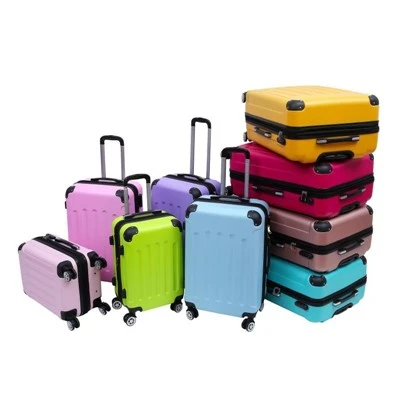
Available in sizes 20", 24", 28" or as a 3-piece set
Weight by size net
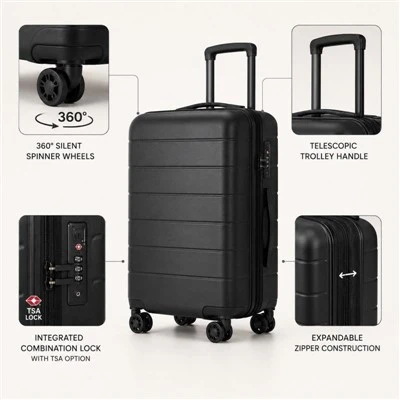
Expandable zipper required
360° Swivel Wheels
Concept: Silent wheel
Trolley handle material and height adjustment
Lock type: Regular lock or TSA lock if needed
Interior structure: X strap, zipper compartment, mesh pocket, wet/dry area
Choice of colors
Packaging procedure
MOQ.
Sample time
lead time for bulk production
Accessory and post-sales support
Our regular products are expandable design, 360° spinner wheels, silent wheels, inner organization, many color options and OEM/ODM customization.
MOQ for existing molds could be 200 sets per style. Sample lead time within 10days, bulk production time about 40days after details confirmed.
Recommended Specification Table for Importers
|
Specification Item |
What to Confirm |
Why It Matters |
|
Shell Material |
ABS, ABS+PC, or PP |
Different materials have different positioning |
|
Shell Thickness |
Confirm by approved sample |
Avoid unclear quality expectations |
|
Measurement Position |
Flat panel, corner, reinforced area |
Thickness may vary by structure |
|
Suitcase Size |
20 inch, 24 inch, 28 inch, or set |
Size affects weight and strength needs |
|
Net Weight |
Confirm by size |
Supports lightweight product claims |
|
Reinforced Areas |
Corners, wheels, handle, lock area |
Key to real durability |
|
Testing |
Drop test, wheel test, trolley test |
Supports quality confidence |
|
Expandable Design |
Yes or no |
Affects capacity and structure |
|
Lock |
Regular lock or TSA lock if required |
Important for U.S. and European markets |
|
OEM/ODM |
Logo, color, size, packaging |
Important for private label buyers |
|
After-Sales |
Accessories and replacement support |
Reduces long-term service pressure |
FAQs Hardside Luggage Shell Thickness
Does a thicker shell mean better for hardside bags?
No. A thicker shell can increase the cost and weight, but does not necessarily mean better durability. Importers should consider shell material, structure design, reinforced areas and test results together.
Hardside luggage is available in a range of shell materials.
Common options can be ABS, ABS+PC and PP. Importers should verify the exact material before writing product copy or placing orders, as each material has a different positioning.
Does the shell thickness vary with different sizes of luggage?
Not necessarily. The size restrictions for a 20 inch carry-on and a 28 inch checked suitcase might be different. Importers must check thickness and weight by size.
What can importers do to check shell durability?
Importers can check approved samples, compare shell samples, ask about factory quality control, drop testing, wheel testing, trolley testing, and final inspection.
Does the lightweight luggage claims depend on the shell thickness?
Yes. If the shell is too thick, the suitcase could be heavier. Real net weight data should support any claim of "lightweight luggage".
What should buyers include in the specification sheet?
Buyers shall write down the shell material, shell thickness, measurement position, tolerance, size, approved sample reference, testing requirement and inspection standard.
Final Advice to Importers
Shell thickness is important, but shouldn't be the only measure of hardside luggage quality.
Better sourcing decision by looking at the full product structure:
Material.
Thickness
Weight .
Strengthened areas
Wheelbase
trolley-handle
Lock
Internal structure
Testing process
Sample Approval Standard
After sales support
The goal for importers is not to buy the thickest suitcase. The aim is to select the correct shell architecture for the target market, price point and sales channel.
If you are creating a hardside luggage collection for wholesale, e-commerce, corporate gifts or private label projects, please ask for a shell sample comparison prior to confirming the final specification.
CTA
Looking for help comparing hardside luggage shell options?
ABS, ABS+PC or PP Hardside Luggage Shell Sample Comparison Contact us for shell sample comparison, material suggestions and OEM/ODM development support. We can help you review shell structure, weight, size options, testing requirements, packaging, MOQ and production lead time before bulk ordering.