Hardside Luggage Materials Importers & Brands PC vs ABS vs PP
Developing a hardside luggage collection, material choice is one of the most important decisions for importers and luggage brands.
The shell material affects cost, weight, durability, product positioning, customer reviews and even after-sales claims. A suitcase may look the same in photos but the difference between PC, ABS, ABS+PC and PP can make a huge impact on how the product performs in real travel conditions.
For B2B buyers, the question is not "Which material is best?"Well, a better question is:
Which material fits best with my sales channel, price point, target customer and tolerance for return rate?
This guide will explore the key differences between PC, ABS, ABS+PC, and PP hardside luggage and provide a practical checklist for importers, wholesalers, e-commerce sellers, gift suppliers, and private label luggage brands.
The Importance of Hardside Luggage Material
Material is not a technical spec. It directly influences the business performance of a luggage product.
Shell material impacts on importers and brands:
Cost of product
Weight.
Impact Strength
Scratch visibility
Flexibility
Quality of appearance
Stability of molding
Perception of customers
Return Ratio
Positioning of the channel
The material logic of budget luggage should not be the same as that of premium business travel suitcase. Different requirements for a supermarket luggage set, an Amazon product, a department store suitcase and a DTC brand launch.
Not matching the material with the market properly, the buyers may have problems like:
Negative reviews about crack
Complaints about the suitcase being cheap
High return rate because of shipping or travel damage
Distributor price pressure
Hard to Explain Product Value to Customers
Not being well distinguished from similar luggage listings
That's why importers should look at material and shell thickness as well as recycled material ratio, molding process, product size, weight, testing, and after-sales support.
Typical Hardside Luggage Materials
The most common hardside luggage materials are
PC
ABS.
PC+ABS
PP
Every material has its own pros and cons . Importers should not use the same material description for all products as different materials have different selling points.
We currently make our hardside luggage out of ABS, ABS+PC and PP. For certain material requirements, buyers should confirm the final specification before quotation, sampling and mass production.
Flexible and Premium but Cost-Conscious PC Luggage
PC, or polycarbonate, is a common marketing term for a higher-end hardside luggage material. It is appreciated for its flexibility, impact resistance, and premium product positioning.
PC Luggage Advantages
PC is frequently used for luggage products requiring a more upscale image. Brands that want to stress durability, flexibility and long-term travel use can be appropriate.
Common benefits include:
Greater flexibility than stiffer, low-cost materials
More powerful premium positioning
Best for mid to high-end retail or DTC brands
Widely used in business travel and frequent traveler product lines
Limitations of PC Luggage:
PC is generally more expensive than ABS. This can affect the cost of the product and the final retail price for importers.
Possible restrictions are:
Material more expensive.
Stronger price pressure in budget channels
Need for better confirmation of specification
Not always fit for promotional luggage at low prices
PC Luggage Best-Fit Channels
PC luggage is generally more suitable for:
DTC luggage brands
Premium online stores
Department Store
Lines of Business Travel Products
Collections for Frequent Travelers
Premium Corporate Gifts
Note from Importer
If supplier says the suitcase is PC, importers should ask if it is 100% PC, PC composite or ABS+PC. They are not the same. The material name should be confirmed clearly on the spec sheet.
ABS Luggage: Cheap and Common in Entry-Level Markets
ABS is popular for hardside luggage, as it's cost-effective and easily positioned for mass-market sales.
Benefits of ABS Suitcases
For price-sensitive channels, ABS can be a practical choice. It allows importers to create luggage at a competitive price, but that looks like hardside luggage."
The usual advantages are:
Cost efficient
Suitable for mass market products
Good for promo or entry level luggage
Fácil de desarrollar en diferentes colores y tamaños
Ideal for luggage sets
Disadvantages of ABS Luggage
ABS is more price-driven normally. If the shell is thin or the quality of the material is not controlled, the product may feel less durable.
Potential limitations are:
Lower premium perception versus PC
More sensitive to shell thickness and quality of molding
May not be the best for high return-risk channels if QC is weak
Needs careful testing for effect and durability.
Best Fit Channels ABS Suitcases
ABS luggage can be good for:
Supermarkets
E-commerce channels spend
Markets for wholesale
Promotional items
Luggage sets entry level
Import programmes sensitive to price
Note to Importer
Material names are not the best quality judge when sourcing ABS luggage." Ask about shell thickness, grade, recycled content, weight and testing.
ABS + PC Luggage: Fair compromise between price and appearance
ABS+PC is commonly used when buyers want a compromise between controlling cost and better appearance or performance positioning.
For many B2B luggage projects ABS+PC can be a practical middle-ground option. It could offer better perceived value than regular ABS, but still be cheaper than a full premium material alternative.
Advantages of ABS+PC Baggage
ABS+PC can help brands position the product above entry level ABS luggage, but not quite into the premium PC pricing.
Common benefits include:
Cost and product appearance balanced
Superior market position to basic ABS
Great for medium-range luggage collections
OEM/ODM development flexible
Good for multiple channels
ABS+PC Luggage Restrictions
The quality of ABS+PC depends on the actual material structure and the production process. Not all ABS+PC luggage is created equal, so buyers beware.
Potential limitations are:
Material ratio to be checked
The molding process determines the quality of the surface.
Durability is still a function of shell thickness and structure
Buyers need clear specification from the factory.
ABS+PC Travel Best-Fit Channels
Use for: ABS+PC suitcase
Amazon vendors.
Medium-sized eCommerce stores
Distributors by region
Store brands
Fashion travel collections
Luggage lines business casual
Gift channels that require improved perceived value
Note from the Importer
ABS+PC is a good choice for importers who want to balance price, appearance and product positioning. But the actual material specification need to be confirmed for mass production.
PP Luggage: Light Weighted Opportunity and Flexible Product Positioning
PP, or polypropylene, is another popular hardside luggage material. It is often selected by buyers who are looking for a different balance of weight, flexibility and cost.
Benefits of PP Luggage
PP can be used for luggage products where the buyer wants a practical and flexible shell material. Depending on design, shell thickness, hardware and testing, it can be used for a variety of markets.
Typical benefits include:
Practical for hard case development
Design can support lightweight product positioning depending upon
Suitable for family, student and mass travel products.
Works for different color and size schemes.
For OEM/ODM project applications
PP Luggage Restrictions
Like other materials, the PP properties also depend on the actual production quality. No Importers should not depend on the name of the material.
Possible limitations include:
Shell feel and appearance must be checked by sample
Thickness & Molding Quality Are Important
Durability in the end depends on product structure and testing
Might need to be positioned carefully depending on channel
PP Luggage Best Fit Channels
PP luggage might be good for:
Mass Market Travel Products
Travel collections: family
Student satchel
Mid-tier retail programmes
ecommerce listings
OEM/ODM product lines
Importer's Note
If lightweight positioning is used in marketing, the actual net weight shall be displayed clearly. Our regular 20 inch, 24 inch and 28 inch hardside luggage can be around 2.8 kg, 3.5 kg and 4.5 kg depending on size and configuration.
PC vs ABS vs ABS+PC vs PP Importers Quick Comparison
|
Material |
Main Positioning |
Typical Strength |
Key Concern |
Suitable Channels |
|
PC |
Premium |
Flexibility and high-end image |
Higher cost and specification control |
DTC, department stores, business travel |
|
ABS |
Entry-level to mass market |
Cost control |
Thickness, cracking risk, lower premium feel |
Supermarkets, wholesale, budget e-commerce |
|
ABS+PC |
Mid-range balance |
Appearance and cost balance |
Material ratio and molding quality |
Amazon, e-commerce, private label, gifts |
|
PP |
Practical and versatile |
Flexible positioning and possible lightweight appeal |
Shell feel, thickness, structure testing |
Family travel, student, mass retail, OEM/ODM |
How to Choose Luggage Materials for Different Sales Channels
Different channels require different material strategies. Importers should not use a single product specification for all markets.
1. Amazon and Marketplace Sellers
The things Amazon and the online marketplace sellers need to be extra careful about are the customer reviews, the return rate and the accuracy of the product description.
Buyers should consider for this channel:
Description of clear material
Accurate size and weight data
Strong wheel and handle quality.
Expandable zipper if sold
Good packing to minimize damage in transit
Spare parts after sales support
ABS+PC and PP can be a practical choice for mid-range marketplace products. Quality control has to be strict with budget products that might use ABS. PC can work for higher end marketplace positions if price permits.
Recommended Methodology
For Amazon and e-commerce sellers, choose a material that is both visually appealing and durable. Don't exaggerate. If the suitcase is ABS+PC, do not say it is pure PC.
2. E-Commerce Stores (Standalone)
Independent eCommerce stores need more compelling brand stories and product differentiation.
For this channel buyers should look for:
Story material:
Positioning of lifestyle
Color Choices
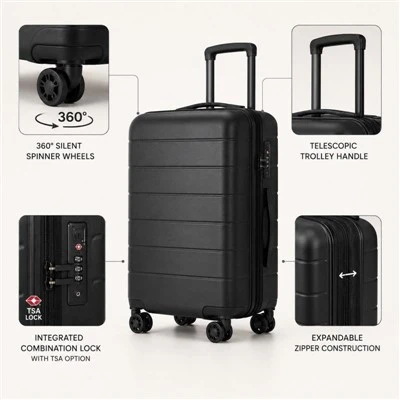
360° spinner wheels with a smooth glide
Silent wheel design
Expandable Layout
Internal organization
Policy on spare parts
ABS+PC or PP may be appropriate, depending on the price position. PC can also be suitable for development of higher end brands, but with the specification confirmed.
Suggested strategy
For independent e-commerce, the material should fit the brand image. Positioning a "premium business travel" brand versus a "high-value family travel" brand should be based on different product claims.
3. Mass Retail and Supermarkets
Supermarkets are often price sensitive, functionally basic, stable in supply and effective in packaging.
For this channel, buyers should think about:
Affordable price
Standard dimensions
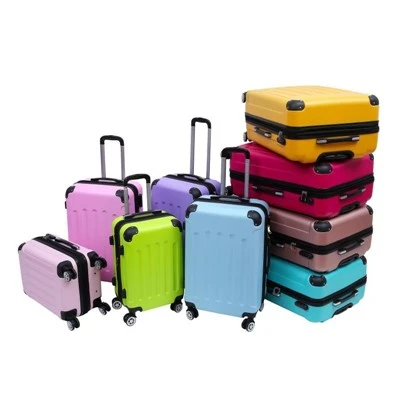
Set options (3 piece)
Heavy duty carton packaging
Basic color schemes
Large orders with consistent quality
ABS and PP are practical choices for mass retail. ABS+PC can be used when the buyer is looking for a better perceived value.
Suggested approach
For the supermarket channels, don't get too complicated with the spec. Focus on price, ruggedization testing, packaging, size, and basic after-sales support.
4. Department store
Department stores generally need to get better looking, have a better sense of company identity and have a more upscale customer experience.
For this channel buyers should consider:
Finish on shell surface, better
Solid material story
Wheels run smooth and quiet
Enhanced trolley handle feel
Good interior construction
Premium colors
Easy-to-read product labels
For positioning in department stores, PC or ABS+PC may be more appropriate depending upon the price target. PP can work if the design and finish match the channel.
Recommended Approach
For department stores, the material should assist a stronger retail story. In store the product has to feel reassuring when consumers touch, open, roll and compare.
5. Gift & Corporate Channels
Gift channels need to balance appearance, perceived value, customization, and delivery stability.
Buyers should consider for this channel:
Logo-Einstellung
Color adjustment
Special Packaging
MOQ
Lead time for production
After-sales service for replacement parts
Uniform appearance on quantity orders
ABS+PC is frequently a good choice for gift channels because it can deliver a higher perceived value at a controlled cost. ABS may be good for promotional gifts, and PC may be good for premium corporate programs.
Suggested Approach
Gifts channels should match materials with recipient profiles and budgets. Business gifts might require a more premium shell and a better color finish.
6. DTC Luggage Firms
DTC brands need repeat customers, a good story, and long-term trust.
For this channel buyers should think about:
Clear material placement
Real testing needs
Good after sales policy.
Strong consistent design
Special colors
Improved user experience
Trusted production partner
PC, ABS+PC and PP can be used depending on the position of the brand. The secret is to be honest and specific about the product copy.
Suggested Approach
DTC brands should avoid vague claims like "premium material" without explaining what it means. Instead, explain how the selected material fulfills the customer's travel needs.
Don't pick luggage material by name alone
And one of the biggest mistakes in sourcing is to specify luggage only by the name of the material.
For example, two ABS suitcases can behave very differently. Two ABS+PC suitcases can also be different from each other based on the actual material ratio, shell thickness, molding process and structure design.
Importers must always check the following details.
1. Thickness of Shell
Shell thickness affects strength, weight, cost and customer perception.
If the shell is too thin the suitcase may feel weak. If the shell is too thick, the suitcase could be heavier and more expensive.
Importers should have the factory check shell thickness by size.
2. Percentage of Recycled Content
The proportion of recycled material can influence consistency, durability and appearance.
Importers should ask:
Is the material virgin or recycled?
What is the percentage of recycled material?
Is the ratio the same for all orders?
Will the material impact color stability?
Will it affect performance on impact?
This is particularly important for importers selling into channels with high quality expectations.
3. Molding Process
The molding process determines the shell shape, the surface finish, the strength of the corners and the consistency of production.
Importers should ask themselves:
What is the process for molding?
Same thickness of the shell?
Are corners reinforced?
Is the surface quality the same in every batch?
Are there visible marks, deformations, weak points?
Even a good material may perform poorly if the molding process is not controlled.
4. Structure of product
It is not only the material that makes luggage durable. The whole construct is important.
Importers should also consider:
wheelbase strength
Handle structure of trolley
Position lock
Quality of the zipper
Build corner
Fixing inside
Zip fastening, expandable.
Shell and frame joint
To make a durable hardside suitcase, you need a good material and a good structure.
How to request material specifications from factory
Before placing a bulk order, the importer should ask the supplier for a clear material specification sheet.
A practical material specification sheet should contain:
Product model number
Material of shell:
Structural material
Thickness of the shell
Dimensions of the Luggage
Nett weight
Expandable structure Non-expandable structure
Type wheeled
Material Handling
Type of lock
Interior architecture
Available colours
Method of packaging
Test items.
Replacement parts support
For example, our standard hardside luggage options are available in 20-inch, 24-inch and 28-inch sizes. The net weight can be around 2.8 kg, 3.5kg and 4.5kg depends on the size and configuration. Color options include black, champagne gold, red, green, yellow, dark blue, pink, army green, gray, and other customized colors. All styles can be made to feature an expandable structure.
What Test Reports Should Importers Request?
Testing enables buyers to verify the suitability of material and structure for the target market.
Importers can request:
Drop test data.
Wheel test data
Trolley handle test info
General particulars of outgoing inspection
Verify impact on shell
Inspection of zipper and lock
Test loaded rolling
Inspection of Packaging
Our quality control process can include outgoing inspection, drop test, wheel test, trolley test. Factory sampling and mass production for certain orders should be confirmed by the buyers as to which tests are required.
Why material claims need to be correct
Accurate material claims are vital for Google SEO, customer trust and long-term brand credibility.
For instance:
Do not call ABS+PC "100% PC"
Don't call a suitcase lightweight without citing actual weight
If product has a regular lock DO NOT say TSA lock.
Do not include certifications that are not really available
No claim of special material ratio without confirming from factory.
Clear and honest product information can help reduce disputes, boost buyer confidence and support long-term B2B cooperation.
B2B Material Selection Checklist Practical
What should importers ask before ordering hardside luggage?
Contents
ABS or PC or ABS+PC or PP ?
Is the material verified in writing?
Is it fresh or recycled material?
Recycling Material Ratio?
Do the materials remain consistent from one batch to the next?
Weighting
What is the net weight for each size?
Does it weigh right for the market it is meant for?
Can real data support the product being called lightweight?
Structure
Does the suitcase expand?
Is the wheelbase stronger?
What handle does the trolley have?
Is it a regular lock or a TSA lock?
What internal structure does it have?
Inspection
Any outgoing inspection?
Drop testing available?
Do you have wheel testing?
Is there trolley testing?
Can you share test videos or reports?
Personalization
Can I customize the logo?
Can I change the color?
Is the size customizable?
Yes, we can customize the packaging.
What is the MOQ?
What is the sampling time?
How long is the production lead time?
Post Sale
Do you have spare parts?
What after sale support is there?
Can you provide replacement parts to distributors?
Do you have a clear quality issue policy?
FAQ About Hardside Luggage Materials
Which is the best hardside luggage material?
No single material is best for all buyers. The PC is frequently used for premium positioning, but ABS is a cost-effective material. ABS+PC is a balanced option, and PP can be practical for developing versatile products. The best choice will depend on your channel, price point, target customer and quality requirements.
PC luggage better than ABS?
PC is often sold as being more premium than ABS but often costs more. ABS is suitable for budget and mass-market channels if shell thickness, structure and testing are adequately controlled.
Are ABS+PC Suitcases Good for Importers?
ABS+PC could be an attractive choice for importers looking for a balance of cost, appearance and market position. However, buyers should check the actual material specification and not assume all ABS+PC suitcases perform identically.
Is PP luggage good for hardside suitcases?
Yes, PP is good for hardside luggage. Depending on the design, thickness, structure and testing, it can be suitable for family travel, student luggage, mass retail and OEM/ODM projects.
Should importers request material test reports?
Yes, Importers are advised to ask for material specifications and testing information prior to bulk orders being placed. Tests may cover drop tests, wheel tests, trolley handle tests and outgoing inspection.
Is the material of luggage related to return rate?
Yes. Material, shell thickness, molding quality, wheel base strength, and overall structure can all impact durability and customer satisfaction. Cracking, complaints and higher return rates due to poor material selection.
How can brands properly describe luggage material?
Brands should use the exact material name confirmed by the factory. If you say PC, then it should be pure PC, not ABS+PC. If the suitcase uses a standard lock, do not refer to it as a TSA lock unless it is a TSA lock.
Importers' Material Comparison Sheet
Material Comparison Sheet: This helps the buyers to compare the different luggage options before they make a sourcing decision.
A good comparison sheet should have:
Material selection
Size
Weight
Thickness of shell
Function that can be expanded
Type of Wheel
Type of handle
Type of lock
Internal structure
Packaging Procedure
Minimum Order Quantity
Sample time
Manufacturing lead time
Available colors:
Questions for testing.
After sales parts support
This allows importers to make a structured comparison between ABS, ABS+PC, PP and other requested materials.
Sample Kit Recommendation
Brands and importers can reduce the risk of sourcing when developing a new line of luggage by using a sample kit.
Sample kits may consist of:
Samples of different shell materials
Color swabs
Wheel choices
Trolley handle choices
Options lock
Fabric samples for interior
Packaging reference
Test video or inspection reference
Buyers can review a sample kit to make better decisions before mold confirmation, quotation approval and bulk production.
Last advice for importers and brands
Choosing the right hardside luggage material is not just a comparison between PC, ABS, ABS+PC and PP. It is about matching the product spec to your business model.
If your channel is price sensitive, then ABS or PP might be good options. If you need better perceived value, ABS+PC may be a strong middle-ground option. If your brand targets premium business travelers or frequent flyers, PC may be worth considering if the cost and spec check out.
But a material name alone is never sufficient. Importers should also consider:
Thickness of shell
Ratio of recycled material
Processing
Weight of product
Wheel & Handle Quality
Test procedure
Packaged
Spare parts assistance
Post sales policy
We offer hardside luggage in ABS, ABS+ PC and PP. The sizes offered are the regular 20, 24 and 28 inches. OEM/ODM customization is available for logo, color, size, packaging. Existing molds MOQ can be 200 sets per style; Sample time is within 10 days. Bulk production is about 40 days after details are confirmed.
If you are looking to source hardside luggage for Amazon, e-commerce, supermarkets, department stores, gift channels or DTC brands, please contact us to request a material comparison sheet or sample kit. We can assist you in comparing appropriate material options, product structures, colors, packaging and testing requirements for your target market.
CTA
Need help picking the best hard-sided luggage material?
Request a Material Comparison Sheet or Sample Kit Contact Us Our team can assist you in comparing ABS, ABS+PC, PP and other required material options based on your target channel, price range, customization needs and quality requirements.