Hardside Luggage Quality Inspection Checklist for Importers
When dealing with luggage importers, you should never choose hardside luggage based on its looks and price. A suitcase can appear appealing in product photos but customer happiness depends on details that are much more difficult to evaluate at first glance: shell strength, wheel durability, trolley handle stability, zipper smoothness, lock function, inner lining, accurate size and export packaging.
That is why a clear quality inspection checklist is important before placing a bulk order. It allows importers to compare suppliers more professionally, reduce after-sales problems and make better decisions before mass production.
OEM/ODM hardside luggage buyers should not only inspect at the end of production. It is better to check the key quality points from sample approval to pre-shipment inspection.
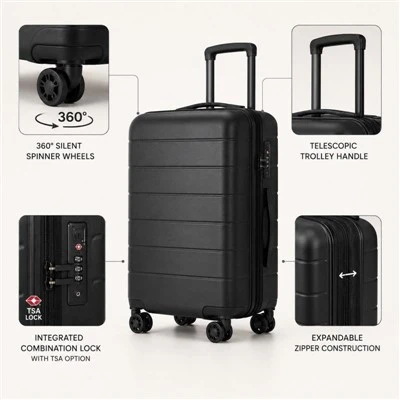
Our hard-sided luggage is made from ABS, ABS+PC or PP. The regular sizes are 20 inch, 24 inch and 28 inch with reference net weights of approximately 2.8 kg, 3.5 kg and 4.5 kg respectively, depending on the size and configuration. The luggage can be made with 360° silent spinner wheels, expandable structure, interior organization, customized logo, color, size and packaging.
This checklist is designed for importers, wholesalers, distributors, e-commerce sellers, gift channels and private-label luggage brands who need a practical way to evaluate hardside luggage before ordering in bulk.
Why You Should not Judge Hardside Luggage Only by Appearance and Price
Hardside luggage is a product of structure. The shell, wheels, trolley handle, zipper, lock, lining and packaging all work together to provide the ultimate user experience.
The price may look good on the quotation stage but if the product breaks in real operation, importers may have to deal with:
More people bringing back goods
Negative reviews from customers
Additional costs of replacement
More pressure from the distributors.
Tarnished brand image
Difficulty in getting repeat orders
For instance, problems with wheels are usually among the most visible complaints of end users. But the real problem is not necessarily the wheel itself. Maybe wheel base, screw fixing, shell corner strength or bad assembly. The same goes for trolley handles, zippers, locks and lining.
A professional luggage inspection checklist helps importers to look beyond the surface and judge the product as a whole travel item.
8 Important Inspection Modules for Hardside Luggage
1. Shell Check
The shell is the first thing customers see, but it is also one of the most important structural components of hardside luggage.
Importers must verify:
Material verification: ABS, ABS+PC or PP
Scratches on surface
Color difference
Uneven texture
Deformed
Corners of cracks
Weak areas around wheels and handles
Rough edges or trimmed poorly
Expansion zipper connection for expandable luggage
Different shell materials have different selling points. So the importers should confirm the material clearly before sample approve and mass production. Do not ever mix material descriptions in marketing copy unless the supplier verifies the exact construction.
For example, a suitcase made from ABS should not be sold as PC luggage. If it is ABS+PC, the supplier should explain the structure and position clearly.
2. Checking The Wheel
One of the most important inspection points for hardside luggage are wheels.
We can manufacture our hardside luggage with 360° spinner wheels and silent wheel design. For importers, this is a key selling point, as smooth and quiet movement directly impacts user experience.
Importers should verify:
Whether all the wheels spin freely
Whether the wheel direction changes easily
Does the wheel make noise when it rolls
When the wheels tremble after loading
The base of the wheel is fixed firmly
Stability of the screw region
If there are cracks around the wheel housing
Support for spare wheel availability
Wheels should be inspected through the surface of the wheel. It should also check the wheelbase and the shell structure around it. Many wheel failures are initiated in the wheel housing area rather than on the wheel.
3. Trolley Handle Check
The trolley handle affects the daily usability as well as the perceived product quality.
Luggage can be made with iron trolley handle, aluminum trolley handle. The regular configurations can be provided with a three-stage trolley handle for 20 inch size, and a two-stage trolley handle for 24 inch and 28 inch sizes.
Importers should verify:
How easily the trolley handle pulls up
Whether all height positions lock properly
If the handle is too shaky
How the button works smoothly
war der Griff gut nach hinten gegangen
Is the handle structure appropriate for the size of the luggage?
Whether the handle is stable after testing
For the B2B customer, the quality of the trolley handle must be checked with the suitcase loaded, not only when the suitcase is empty.
4. Inspection of Zipper
The zipper is a small part, but it directly affects the daily use.
Importers are advised to check:
Smoothness of the zipper
Matching zippers
Gaps in Your Smile
Zipper with loose stitch
Zipper Pull Strength
Expansion zipper function
If the zipper gets caught around bends
Is the zipper tape clean and attached correctly
All styles can be made with expandable structure. Importers need to verify whether the expandable zipper is needed for the order. If expansion section is included, it must be carefully checked in sample inspection and final inspection.
5. Lock Check
Locks influence security and market position.
Common lock options are available for normal production. TSA Locks can be made for specific orders if needed. This is particularly important for buyers concentrating on United States, Europe and other international travel markets.
Importers are advised to check:
How the lock opens and closes smoothly
Whether the set up password is correct or not
If the lock is installed correctly
If the zippers pulls fit the lock properly
Whether the target market requires TSA lock
Is the lock type in accordance with the approved sample
Not every suitcase will come with a TSA lock, so don't assume it does. Lock Type to be confirmed prior to quotation, sample approval and final production.
6. Interior Lining Check
The internal structure influences the actual packing experience for the customer.
Our hardside luggage can have interior features such as X straps, zipper dividers, mesh pockets and wet/dry separation. These features should be checked at inspection as they impact on both the product value and customer satisfaction.
Importers should verify:
Cleanliness of linings
Sewing quality
Loose ends:
Stains or Smells
Force of X strap
Zipper divider functionality
Mesh pocket stitch
Wet/dry section if present
Interior layout consistent with approved sample
E-commerce & private-label brands often show interior photos on the product page. Any difference between the sample and the bulk production may give rise to complaints.
7. Weight and Size Check
Size and weight are checked because they affect product listing, shipping cost, customer expectations and market positioning.
The standard sizes are:
| Size | Reference Net Weight |
|---|---|
| 20 inch | About 2.8 kg |
| 24 inch | ~3.5 kg |
| 28 inch | Approx. 4.5 KG |
Importers must check:
Actual size outdoors
Internal space available for use
Net wgt.
Size of Carton
Packing dimensions 3-piece set
Can the size of the product be changed by extending the functionality?
Size same as order confirmation or not
For the packaging of three-piece sets, normal export cartons can use a carton size of 53 × 35 × 78cm. Importers should confirm final carton size with supplier based on the actual order configuration.
8. Pack Inspection
Packaging is particularly important for export orders as luggage may be subject to pressure, stacking, transport and warehouse handling before reaching the final customer.
Importers will need to check:
Carton strength
Printing on boxes
Shipping marks
Product protection in the carton
Polybag or protection cover
Correct model, colour and size markings
Packing Method 3-Piece Set
Barcode or label required
The packaging meets the approved requirement
Even with well-made suitcases, poor packaging can cause damage to the product. Packaging should be considered part of the product quality system for the importers.
Common Luggage Tests Importers Need to Know
Different buyers may call for different test standard according to market, channel and price level. Please confirm the exact test method before production.
Our quality control process include outgoing inspection, drop testing, wheel testing and trolley handle testing. For other tests such as mileage test, wheel abrasion test, zipper fatigue test or handle jerk test, importers should confirm the specific requirements with the supplier before quotation and sample approval.
1. Drop Test
Drop testing helps to assess the capacity of the suitcase to endure impact during transport and handling.
Importers should take note of the following:
Shell fractures
Corner deformation
Damage to wheel base
Damage to locks
Zipper splitting
Injury:
Movement in the internal structure
After the drop test the suitcase has to be checked thoroughly especially around corners, wheels, handles and lock areas.
2. Jerk Test for Handle
A handle jerk test is used to test the strength of the handle structure when sudden force is applied.
Importers should verify:
Whether or not the top handle remains securely attached
If the side handle loosens
Stress marks on screw placement
If the shell around the handle is broken
if the handle goes back to normal after force
Handle strength is especially important for checked suitcase sizes, as users frequently lift the suitcase when it's fully packed.
3. Mileage Check
Mileage test for rolling durability is conducted for a certain mileage.
Importers should check:
Test distance
Testarea zonei
Load testing
Post test wheel condition
Noise Change Testing
Wheel base condition post testing
This test is good for testing the long term performance of spinner wheels and wheel housing.
4. Test of Wheel Abrasion
The wheel abrasion testing is to evaluate whether the wheel material can resist wear in the repeated rolling.
Importers should verify:
Wear of Wheel Surface
Uneven Wear
Rolling sound
Wobbling of the wheel
After the grinding wheel rotation
Whether the wheel still runs smoothly
Wheel durability can be a big factor in luggage customer reviews in the e-commerce and retail space.
5. Fatigue Test for Zipper
Testing the zipper for fatigue is a way to see if the zipper will still operate after it has been opened and closed many times.
Importers must check:
Zipper slide
Gaps in your teeth
Puller damage
Zipper tape delamination
Corner jamming
If incorporated, the expansion zipper stability
Zipper fatigue is even more critical for expandable hardside luggage, as the expansion section experiences repeated stress during use.
Importers' Guide to AQL Inspection: Important Defect Classification
Importers usually use AQL inspection to categorize defects as critical, major and minor. The particular level of AQL should be agreed between buyer and supplier before inspection.
Critical Issues
Critical defects can influence safety, basic functionality or market compliance.
Examples include:
Sharp edges that could injure users
Lock malfunction, cannot be used normally
Broken handle renders suitcase unusable
Wheel Issues
Shells severely cracked
Incorrect product does not meet order specifications
Critical defects should be taken very seriously because they may cause safety risks, functional failure or immediate customer complaints.
Major Flaws
Major defects may impact the product's function, appearance, durability or satisfaction of the customer.
Examples may include:
Shaking wheels or poor rotation
Trolley handle not locking up
Zipper stuck or out of line
Shell deformation visible
Cracked wheelhouse
Loose lock fitting
Wrong colour or size
Cheaply sewn Inside the suitcase
Expansion zipper not opening/closing correctly
Packaging not robust enough for exportation
Major defects are particularly relevant for importers as they can lead to returns, negative reviews and after-sales claims.
Minor problems
Small defects may not affect the function of the product but may reduce perceived quality.
Examples might include:
Minor surface scratches.
Small color difference
Thread a little frayed
Small stain on interior of lining
Small print problem on carton
minor crop marks
Minor cosmetic imperfections
However, small defects should also be recorded as repeated small problems can affect brand image especially for mid-range and high-end luggage products.
Examples of Suggested Defect Photos for Your QC Checklist
Importers should add real defect photos (if available) to make the inspection checklist more useful. These images help the buyer and factory agree on what constitutes an acceptable inspection.
Examples of recommended images include:
1. Keep going Shell Round Corner
Suggested alt text: Crack in hardside luggage shell around corner after drop test
Use this picture to show problems with shell strength after impact.
2. Broken Wheel Base
Alt text suggestion: hardside suitcase wheel base crack inspection example
See this image to know why wheel base structure should be inspected along with spinner wheels.
3. Trolley Handle, Loose
luggage trolley handle shaking quality control
Use this image to demonstrate bad assembly/handle instability.
4. Misalignment of the Zipper
hardside luggage zipper misalignment defect
Use this picture to demonstrate zipper function and appearance problems.
5. Faulty lock installation
Recommended alt text: inspection of defect in installation of suitcase lock
Show lock looseness, improper installation or poor fit. Use this image.
6. Stain or Loose Thread on Lining
Suggested alt text: defect of loose thread and luggage lining stain
Use this picture to demonstrate typical interior quality problems.
7. Broken Export Carton
Damage to luggage Export cartons Packaging inspection
Use this image to demonstrate the importance of inspecting packaging before shipment.
Practical QC Checklist for Importers of Hardside Luggage
This checklist may be used during sample review, production inspection or pre-shipment inspection.
|
Inspection Area |
Key Points to Check |
Risk If Ignored |
|
Shell |
Material, surface, cracks, deformation, corner strength |
Poor durability, returns, bad reviews |
|
Wheels |
360° rotation, noise, shaking, wheel base strength |
Wheel complaints, after-sales cost |
|
Trolley Handle |
Smooth pulling, height lock, shaking, button function |
Poor user experience, functional failure |
|
Zipper |
Smoothness, alignment, puller strength, expansion zipper |
Stuck zipper, customer complaints |
|
Lock |
Regular lock or TSA lock, function, installation |
Security concern, market mismatch |
|
Interior |
X strap, divider, mesh pocket, wet/dry section, stitching |
Lower perceived value |
|
Size & Weight |
20/24/28 inch, net weight, carton size |
Listing error, shipping issue |
|
Packaging |
Carton strength, labels, protection, three-piece set packing |
Transport damage |
Supplier Data Importers Must Check Prior to Placing an Order
Importers should seek clear information from suppliers on production and services before placing a large order.
Key takeaways:
Production capacity of factory
Line of production information
Material choices
Size choices
Type of wheel
Type of lock
Internal Structure
Ability to customize
quality assurance process
Sample delivery time
Time for mass production.
MOQ
Packaging manner
After-sales and spare parts support
Our factory has two production lines with a monthly capacity of about 30 high-cube containers. We support OEM/ODM customization, including logo, color, size and packing. Existing molds minimum order quantity is 200 sets per style. Sample time can be in 10days and bulk production around 40days after details confirmed.
Hardside Luggage Quality Inspection FAQ
What is the first thing importers should check when inspecting hardside luggage?
First, importers should check whether the product is consistent with the approved sample, including the material, size, color, wheel type, trolley handle, lock, interior structure, packaging and logo details.
Are wheels the most important aspect of the luggage inspection?
Wheels are one of the most important parts as it affects daily use directly. But importers should also check the wheel base, shell corner, screw fixing and rolling performance under load.
Should hardside luggage be subject to drop testing by importers?
Yes. Drop testing evaluates shell strength, corner protection, wheel base durability, handle strength, and overall structure after impact.
Critical, major and minor defects. What is the difference?
Critical defects are either safety-related or make the product unusable. Major defects are those that affect function, durability or customer satisfaction. Small flaws are mostly cosmetic, but still detract from perceived quality.
Can hardside luggage be made for private-label orders?
Yes. OEM/ODM customization can be logo, color, size and packaging. Buyers must confirm all customization details before sample approval and mass production.
What are the most common hardside luggage sizes?
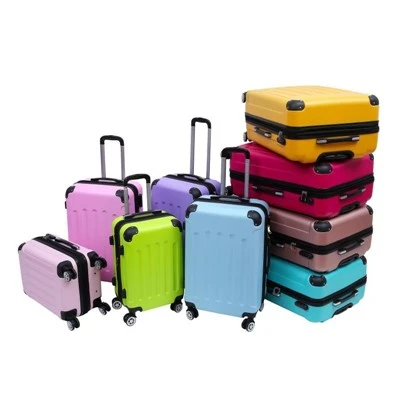
Some common sizes are 20 inch, 24 inch, 28 inch. These can also be packed as 3pc set as per buyer's order requirement.
Are importers looking for support with spare parts?
Yes. Spare parts and after-sales support can be profitable for distributors and sellers to reduce replacement costs and improve customer service.
Final Tips for Importers
A professional hardside luggage inspection checklist should take into account both appearance and real use performance. Importers should be asking themselves not only if the suitcase looks good, but if it can take the rigors of being transported, rolled, lifted, packed and used daily, over and over again.
The main inspection points are shell, wheels, trolley handle, zipper, lock, inner lining, size and packaging. Higher confidence should be sought from the buyer on drop test, wheel test, trolley handle test and other relevant tests before mass production.
For B2B buyers, quality control means more than just avoiding defects. It is also about protecting your brand, reducing after sales cost and building long term trust with your customers.
CTA
Looking for a practical QC checklist for your next hard side luggage order?
Contact us for the hardside luggage inspection point, available material, wheel and trolley handle testing process, OEM / ODM customization, export packaging solution details.
You can also ask for our QC checklist to compare shell, wheels, trolley handle, zipper, lock, interior lining, size and packaging before confirming your bulk order.